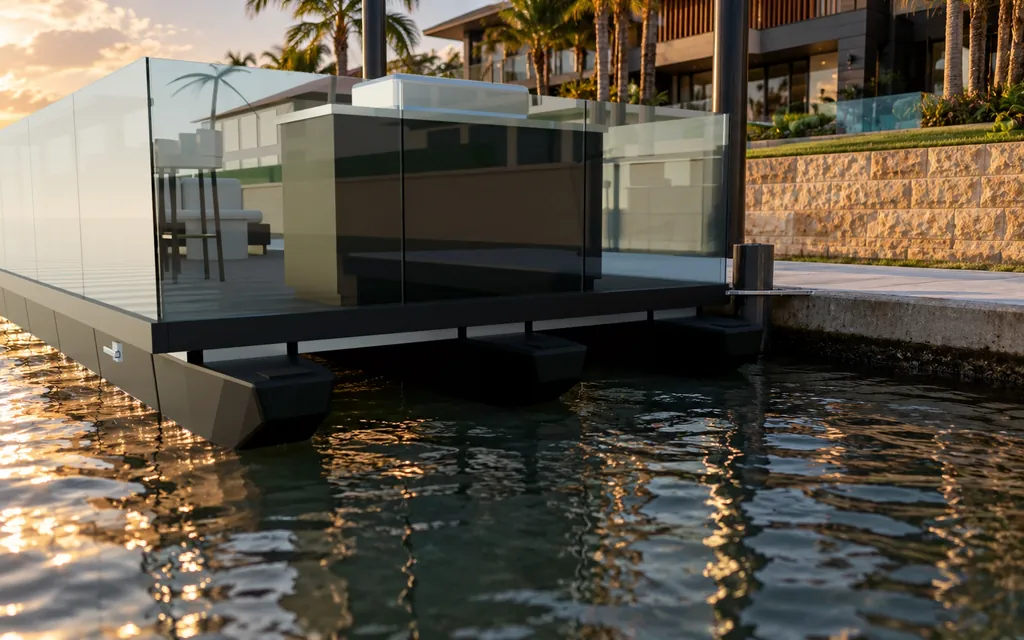
A floating room may feel like a place to forget the working week, but the structure beneath it has a very practical job. It sits in a waterfront environment, exposed to sun, water and changing conditions. ‘Marine-grade’ is a useful conversation starter, not a complete specification or a promise that maintenance disappears. For Driftroom, the meaningful starting point is the actual catalogue: an aluminium frame, polyethylene floats, composite decking and stainless steel fixings. Here is what those choices mean, and what they do not establish.
Ask for the material, not just the label
An attractive phrase cannot tell you an alloy, a fixing grade, an engineering rating or an inspection interval. Where those details are not confirmed in the current catalogue, they should remain questions rather than become claims. The construction page is a useful place to begin understanding the arrangement.
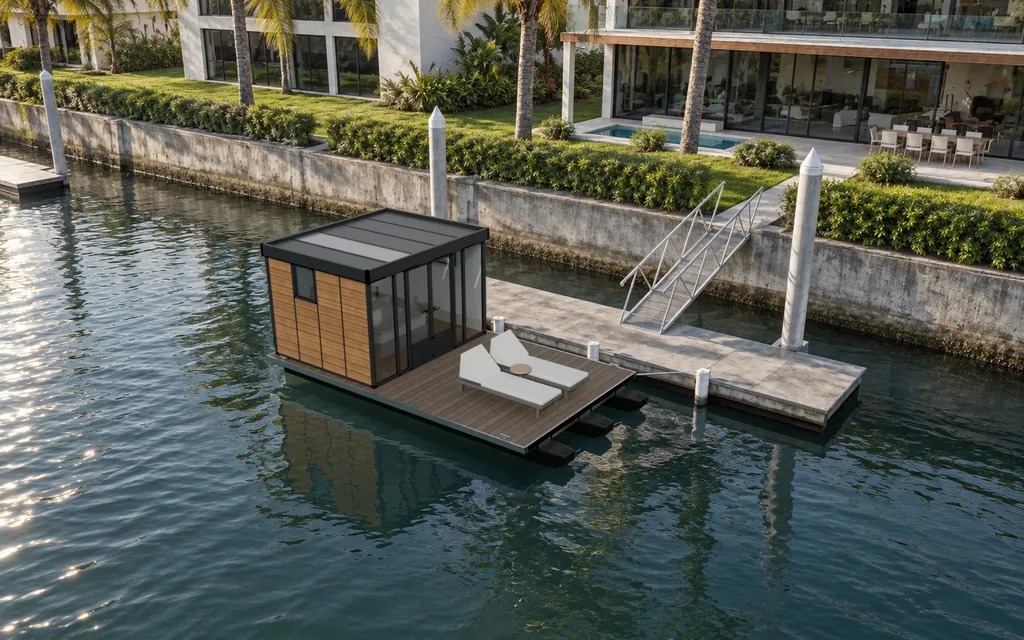
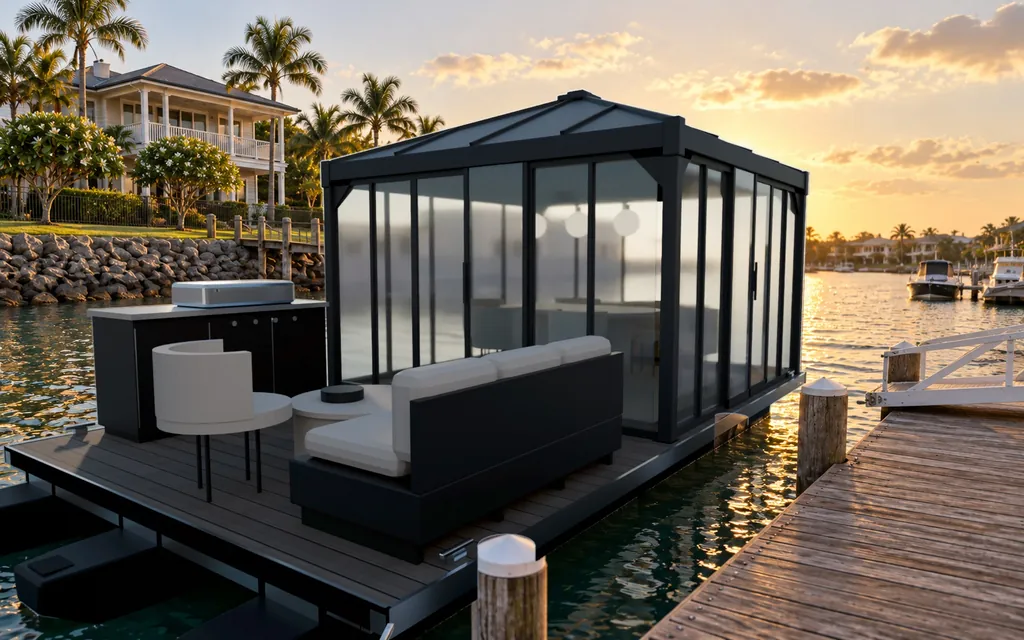
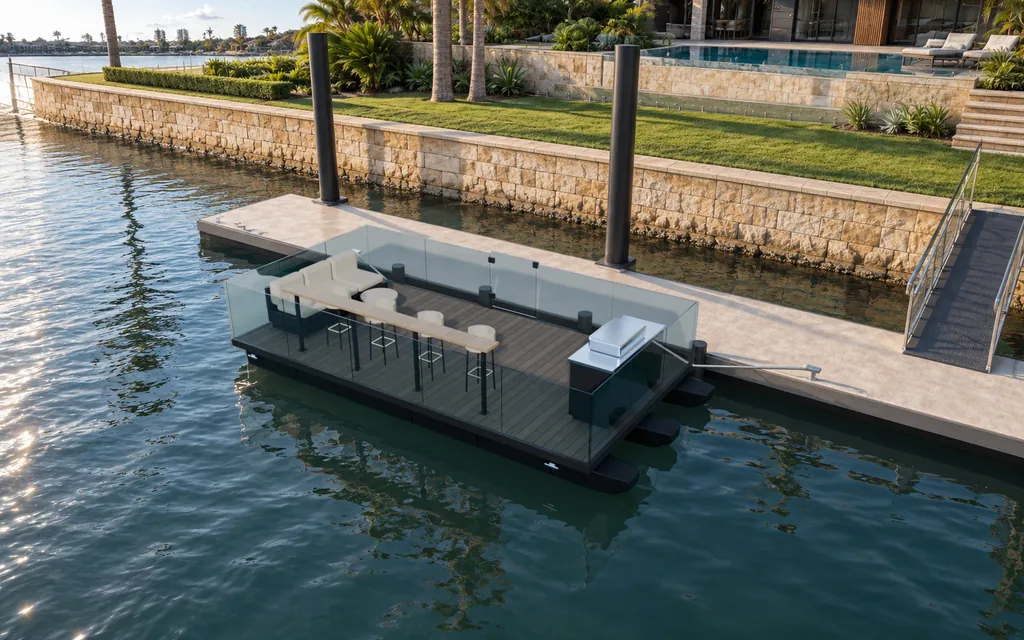
Studio, Pavilion and Terrace use a shared material approach, but their dimensions and structures differ. Studio and Pavilion have 6.91 × 3.70 m platforms; Terrace is 6.91 × 3.20 m. Choosing familiar materials for a waterfront setting does not establish that every product has identical engineering or that every berth is suitable.
The aluminium frame beneath the experience
The catalogue identifies an aluminium platform frame measuring 6.40 × 3.00 m. The widened Pavilion platform also identifies aluminium outriggers and edge beams. These are concrete descriptions of the structure, unlike a general adjective that leaves the actual assembly unexplained.
Salt exposure makes condition worth observing over time. Keep the frame and accessible connections within the regular inspection conversation, and seek qualified advice about anything unfamiliar. The material name alone is not a guarantee against corrosion, damage or deterioration, and this guide does not assign an unconfirmed alloy or load rating.
Would a Driftroom fit at your place?
Polyethylene floats, arranged in three rows
The platforms use three rows of UV-stabilised polyethylene floats. The Studio catalogue describes rotation-moulded polyethylene. Their role is the floating foundation under the frame, rather than a decorative detail. UV stabilisation is relevant to the outdoor setting, but it does not mean unlimited life under every exposure condition.
Pay attention to visible condition, connections and any change in how the platform sits. Debris, an unexpected impact or an unfamiliar change deserves investigation rather than reassurance from a marketing label. Nothing here is a claim that the platform is unsinkable or that inspection of the float system can be skipped.
Composite boards where people spend their time
Composite decking is the surface visitors see and use, from the Studio's open deck to the Terrace outdoors. The catalogue also records deck lights in the Studio's construction details. The attraction of the surface does not remove the practical need to keep it clean and look for changes in boards, edges and connections.
Choose cleaning products and methods with reference to the supplied care guidance, rather than assuming any household cleaner or pressure setting is suitable. Salt residue, dirt and ordinary outdoor use are reasons to pay attention. ‘Composite’ does not make an entire deck maintenance-free, nor does it establish an unconfirmed safety or slip rating.
Stainless fixings still deserve attention
Stainless steel fixings appear in the confirmed material descriptions. Fixings may be small compared with a bedroom or glass room, but the condition of a connection matters to the assembly around it. A material label should never be used to dismiss a loose, stained or damaged connection without checking it.
This guide does not specify a stainless grade, guarantee corrosion resistance or recommend an unverified repair. If something changes, record what you can see and ask for appropriate advice. Mooring lines, cleats and fenders also need attention, although they do a different job from structural fixings. The mooring guide explains that distinction.
A waterfront choice, with ongoing care
Sun and salt are part of the setting that makes a floating room appealing. They are also reasons to keep an eye on its condition. Regular inspections, suitable cleaning and attention to the mooring arrangement belong alongside the enjoyable parts of ownership. No interval, warranty term or storm performance rating is invented here; ask for the guidance that applies to the selected product and installation.
Waterway and mooring rules still apply, and a materials overview cannot approve a berth. Explore Studio, Pavilion or Terrace, then use the existing address journey for a free personal brochure. The team can help bring the product choice and site-specific questions into the same conversation. Good material choices matter most when they are understood and cared for, not treated as a reason to stop looking.