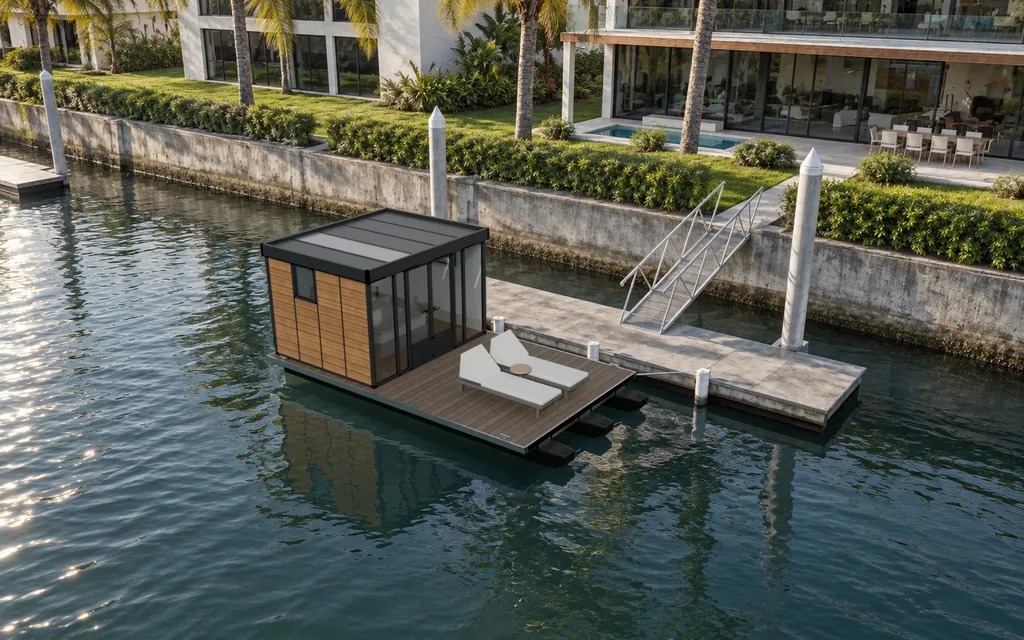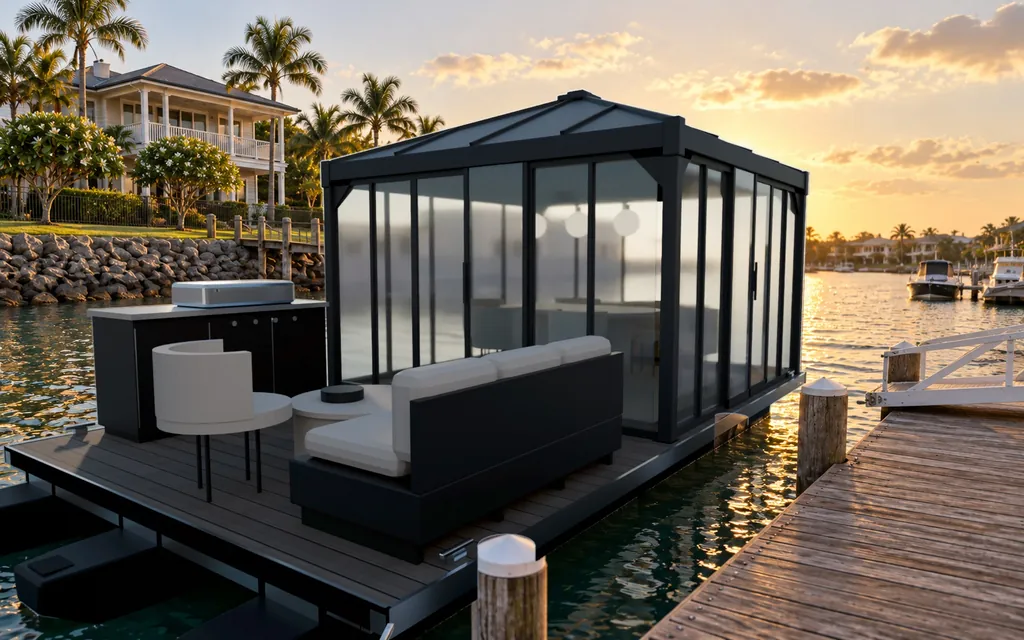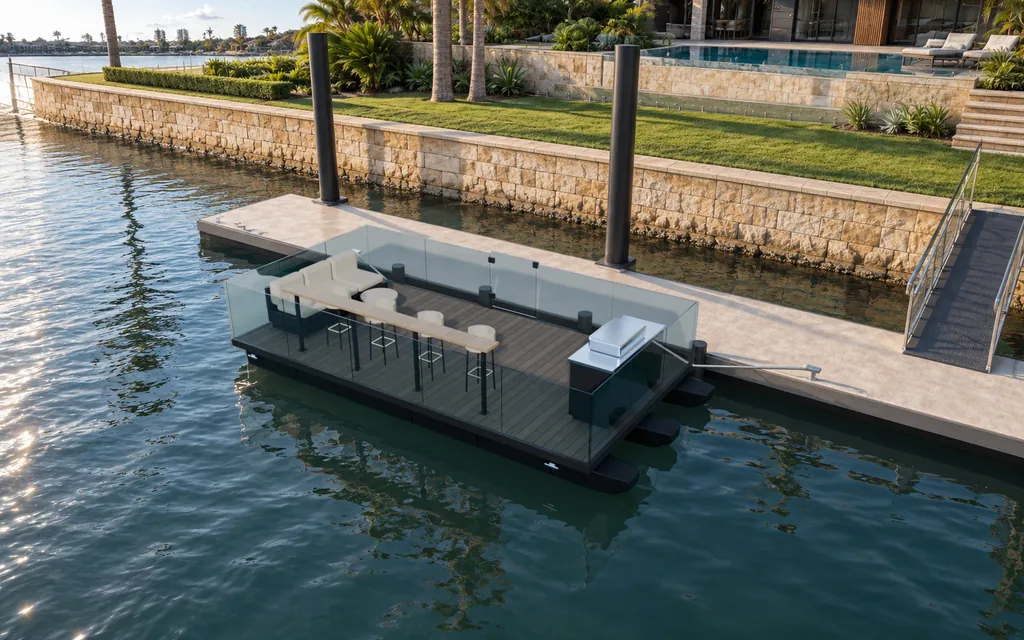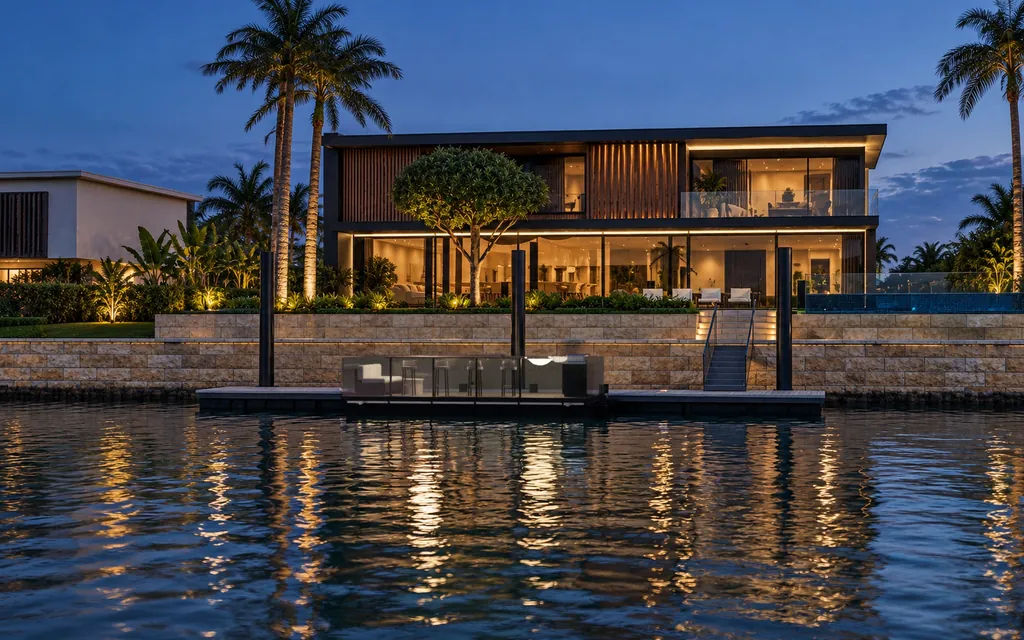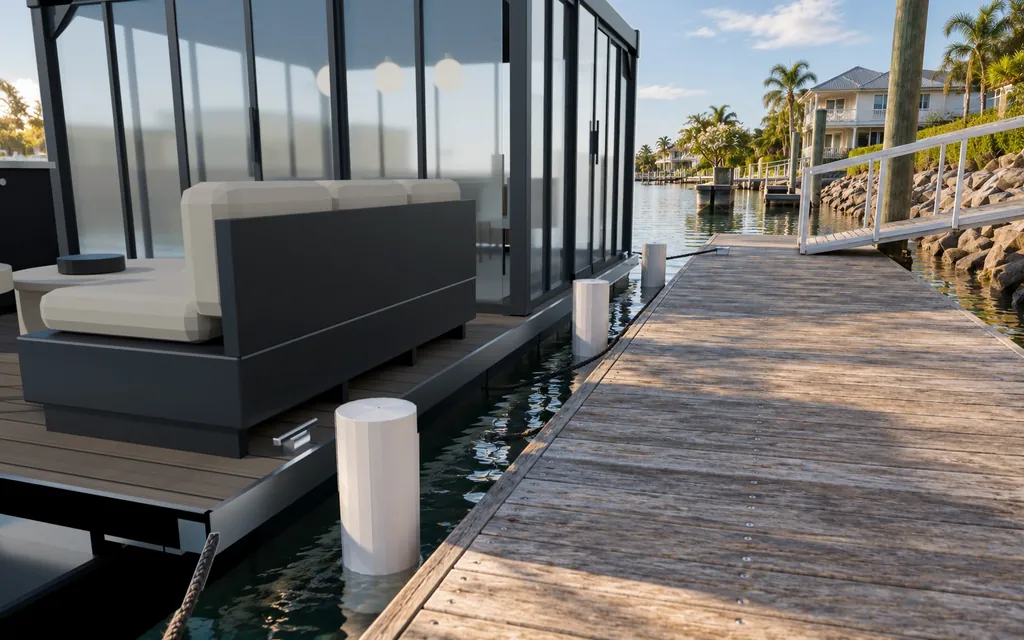
A Driftroom is an unpowered pontoon boat. It has no engine and no gangway of its own. It is towed in and moored alongside the pontoon you already have, held with mooring lines and protected with fenders. This guide explains how that works and what we check at each address first.
Moored alongside, not built in
Nothing is driven into the canal bed and nothing is fixed to your land. The Driftroom sits parallel to your house pontoon, so you step across from one to the other. Because it floats, it rises and falls with the tide just as your pontoon and any boat moored there do.
The platform sits on three rows of UV-stabilised polyethylene floats under an aluminium frame, with stainless steel fixings throughout. The deck sits about 0.48 m above the water.
Lines and cleats
Mooring lines run between cleats on the Driftroom and secure points on your pontoon. Lines are arranged to hold the platform in position along its length and to stop it moving forward and back, while still allowing it to rise and fall with the tide.
The condition and layout of your pontoon's cleats matter. Part of our site check is confirming there are suitable points to tie to, and in the right places for the model you choose.
Would a Driftroom fit at your place?
Fenders
Fenders sit between the Driftroom and your pontoon so the two never rub or knock. They protect both surfaces from wake and wind, and they are positioned along the side where the two meet. If a boat moors on the Driftroom's outer side, fenders protect that side too.
Site-specific checks
Every canal berth is different, so we don't assume a Driftroom suits an address until we've looked. Typical questions include:
Is there enough length and width along the pontoon for a 6.91 m platform? Is there enough water depth at low tide? Will it keep clear of neighbouring berths and the navigable channel? Is the pontoon in suitable condition, with usable cleats? How exposed is the spot to wind and boat wake?
Waterway and mooring rules still apply to a Driftroom. We check each berth, and where something needs confirming with the relevant authority, we tell you rather than assume.
Tides, wind and wake
Gold Coast canals are tidal, so the water level changes through the day. A floating platform simply rides up and down with it, which is why the lines need enough length to allow movement without letting the Driftroom drift away from the pontoon. Lines that are too tight at high tide can strain at low tide, and the reverse.
Wind and passing boats also move the water. Fenders take the small knocks, while the way the lines are led keeps the platform aligned with the pontoon. More exposed berths, such as those near a wide channel or a busy waterway, may need a different arrangement from a sheltered one at the end of a quiet canal.
Before storms or unusually strong winds, it makes sense to check lines and fenders, just as you would for a boat. We explain what to look for when your Driftroom is set up, so you know how it should sit on an ordinary day and what to check when the weather changes.
None of this requires work on your land. If you move house, the lines come off and the Driftroom can be towed to a new berth, subject to the same checks there.
Keeping your boat
Because boats can moor on the Driftroom's outer side, many owners keep a berth for their own boat. Whether that works at your address depends on the space and depth available, which is part of the same check.
What happens next
The easiest start is your address. We use it to look at the water beside your property before suggesting a model. How it works walks through delivery and setup, and the FAQ answers common mooring questions.